
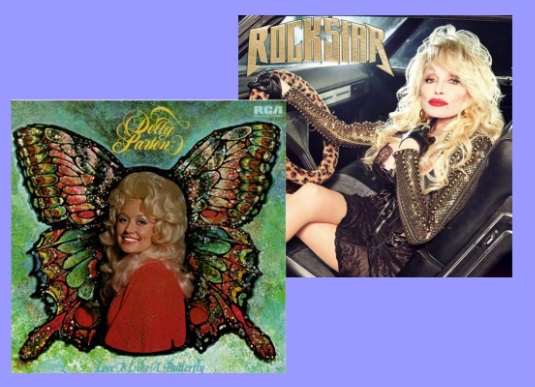
Courtesy of RCA Records
Country Music Legend Dolly Parton Dead at 80
| published August 25, 2026 |
By R. Alan Clanton
Thursday Review editor
Dolly Parton, Grammy award-winning singer and songwriter, actress, theme park developer, philanthropist, and country music icon, died this week at age 80 in Nashville, Tennessee.
Parton was one of the most successful country singer-songwriters of all time, with sales of more than 100 million records worldwide and a cross-over appeal that defied boundaries and carried over through the generations. Among her other achievements: she was inducted into the Country Music Hall of Fame in 1999, and the Rock & Roll Hall of Fame twenty years later. And because of her immense contribution to writing original music—by some conservative estimates Dolly Parton wrote more than 2500 fully-formed songs in her life—she was inducted into the Songwriters’ Hall of Fame in 2001.
As an actress, Parton was best known for some of the most famous comedies of all time, including the huge Hollywood hit 9 to 5, starring alongside Jane Fonda and Lily Tomlin, and The Best Little Whorehouse in Texas, alongside Burt Reynolds.
And in a career inclusive of Hollywood films, television programs, and constant songwriting, singing and performing, Parton also managed to develop, construct and expand of one the most popular family theme parks in the United States.
Dollywood, built originally as the Rebel Railroad roadside tourist attraction in Pigeon Forge, Tennessee, in 1961, and later renamed Silver Dollar theme park in 1977, became Parton’s property in May 1986 when she purchased the majority ownership. In a few short years she expanded and revamped the park into an entertainment colossus, with roller coasters, themed rides, restaurants, and more. Dollywood transformed the sluggish economy of that part of Tennessee and spurred the development of a super-cluster of hotels, restaurants and other theme parks which soon rivaled Orlando, Florida.
Parton, who was born Dolly Rebecca Parton in 1946 in Tennessee, was the fourth of 12 children in her family. Her father, who could neither read nor write, worked as a farmer and in construction, or sometimes both. He also sold moonshine to supplement the family’s tiny income. To make ends meet in the household, Parton’s mother would skillfully make the kids’ clothes by sewing together rags and small and scraps of fabric. This image inspired one of Parton’s earliest songs, "Coat of Many Colors."
Dolly Parton began writing and singing in her early childhood. Her first fully formed country music composition was composed when she was six, though she often joked that she had no memory of a time when she wasn’t writing songs and singing them. At age ten she was already appearing on local and regional radio shows and TV shows as a country music prodigy, and at age 13 she recorded her first single record. Later that same year, after an appearance at the Grand Old Opry, she would meet Johnny Cash, who would encourage her to keep singing and songwriting.
By her late teens she had become a prolific songwriter with a knack for catchy lyrics and punchy, likeable tunes. Parton wrote several songs for Bill Phillips, including “Put it Off Until Tomorrow” and “The Company You Keep,” both of which rose to become Top Ten hits for Phillips. Parton also wrote the famous “Fuel to the Flame” song which became a hit for Skeeter Davis. Parton wrote songs that would later be recorded by Hank Williams, Jr., Kitty Wells, and a dozen other country music performers.
In part because of her voice and her looks, record executives were wary of her chops and bona fides to record her own country music, and intended to shepherd Parton toward soft pop and “bubble gum” rock and roll. But Parton’s heart was clearly in the embrace of her beloved country music heritage and background.
With no formal musical training, Dolly Parton could neither write sheet music nor read it. Entirely self-taught, she nevertheless blazed forward with her career as a prolific and constant songwriter, and as one gifted a variety of musical instruments. Parton was skilled with not only the guitar, but also the autoharp, accordion, recorder, dulcimer, banjo, saxophone, piano, and a variety of small percussion instruments.
Her debut album—titled simply Hello, I’m Dolly—was released in 1966. The album’s success and quality brought her to the attention of the establishment of country music, including singer and songwriter Porter Wagoner, who made her a regular cast member of his popular television show. Wagoner’s faith in her talents prompted him to lobby for Parton to get a chance to record with his own label, RCA. But since RCA executives were reluctant, they urged her to perform duets with Wagoner instead. That combination paid off for both, and some of the pair’s duets from that era became huge hits on country music radio stations, and boosting Wagoner’s record sales. All told, the duo recorded more than a dozen studio albums over a six year period.
Eventually Parton wanted to break from the duets with Wagoner and make a career for herself. Her professional split with Wagoner resulted in the song “I Will Always Love You,” which became a huge hit, shooting straight to the top of the country charts. The song was so big that Elvis Presley, then trying to reboot his career trajectory, took an interest in recording the song, but after Presley’s manager Tom Parker told her she’d have to split the royalties with Elvis, Parton declined the offer. It was the first of many shrewd business moves by Parton which allowed her to keep the fruits of her own creativity and labors in her own bank account.
Parton’s success hit its stride in the 1970s, and by the end of the decade she had not only amassed a huge following among country music fans everywhere, but also found massive crossover appeal to music fans in almost all genres. Her success in movies which also happened to include her original scoring and songs helped fuel much of this wider audience, and by the middle 1980s she had become one of the century’s biggest performers in any musical genre.
Parton was also a true believer when it came to literacy and learning. In 1995 she founded Imagination Library to honor her father who could not read. Originally designed to send a new age-appropriate book to every child in Sevier County, Tennessee until they turned five, the program grew in size and scope—fueled in part by generous outside donations—to become a massive literacy program connected to some 1800 towns and communities and impacting millions of kids across every part of U.S., Canada, Ireland and the U.K.
In many states, the program was supplemented by state and local matching funds, and through annual fundraisers by celebrities and wealthy donors. In 2022, Amazon founder Jeff Bezos donated $100 million to the program; as recently as July of 2026, Taylor Swift and Travis Kelce gave $2 million to the program. Though the exact number of books given to children by the foundation is not known with precision, estimates in 2025 suggested that the total is between 200 and 300 million books, and as many as 1.8 million children annually.
In 2025, The Dollywood Foundation gave $4.5 million to the Nashville Public Library, once of the largest single gifts ever offered to a public library system.
After massive wildfires swept through parts of Tennessee in 2016, Dolly Parton established the My People Fund. The wildfires, which were found to have been deliberately set by two teenagers, killed 14 people and destroyed many thousands of homes, structures and businesses. The fund eventually established a payment of about $1000 per month to those family households which were destroyed, with additional material donations and funds available for small businesses and individuals impacted by the fires. In the end, the My People Fund was able to deliver about $12.5 million into the hands of those left homeless or jobless in Sevier County.
Even for those with little interest in country music, Dolly Parton’s film career placed her squarely in at the forefront of popular culture and Hollywood fame. Released to theaters in 1980, the comedy 9 to 5—in which three women employees with a sexist, cheapskate boss develop an elaborate scheme for revenge—became the smash comedy hit of the year. The chemistry between the three leads, Parton, Jane Fonda, and Lily Tomlin, helped to propel the movie into the pantheon of great American film comedies, but it also established that Dolly Parton’s talent for showmanship was formidable.
Parton also starred in The Best Little Whorehouse in Texas (1982), Rhinestone (1984), Steel Magnolias (1989), and Straight Talk (1992), along with a half dozen other films.
Dolly Parton’s prolific songwriting career meant she was almost always rolling out a new album, and from 1967 to 2024, Parton recording an astounding 49 albums of her own material, not counting the many collaborations with Porter Wagoner, Kenny Rogers, Tammy Wynette, Linda Ronstadt, Emmylou Harris, and others.
Parton won a remarkable 11 Grammy Awards, was nominated for two Oscars, and won six Golden Globe Awards. Parton's death was announced by her nephew Bryan Seaver in a video shared widely online.
Health issues had taken a toll on Parton's performances and creative output for the last year. She had missed participating in several planned public events, including the opening of new attractions in Pigeon Forge, due to kidney stones and kidney problems. Later, she was forced to postpone a series of engagements at Caesar's Palace in Las Vegas for reasons of bad health.
Parton was predeceased by her husband of 60 years, Carl Thomas Dean, who owned an paving and construction business in Tennessee. Dean died in March of 2025.
Her family originally gave no cause of death, but Dolly Parton had told the media and fans she was experiencing health issues for some months. Parton had been hospitalized last week with several issues, among them kidney problems. The New York Times reported, several hours after her death, that Parton had been battling an unspecified form of cancer.
Related Thursday Review articles:
The Runaway American Dream: A Look Back at Born to Run; R. Alan Clanton; Thursday Review; January 23, 2026.
Dire Straits Brothers in Arms 40th Anniversary; By R. Alan Clanton, Thursday Review editor; November 1, 2015.